5/30/23

Possible Signs of Hereditary Cancer

This is the part that is often missed when trying to "connect the dots" in hereditary cancer.

Sadly, this lack of knowledge about how one single germline mutation can cause different cancers in family members is why genetic testing is often not recommended for some individuals who may be at risk for hereditary cancer. I know, because it tragically happened to my late wife.

That's why sharing family health history, genetic testing, and genetic counseling are so important. Genetic testing saves lives. Knowledge is power.

For more info about hereditary cancer, go to www.genetinary.org
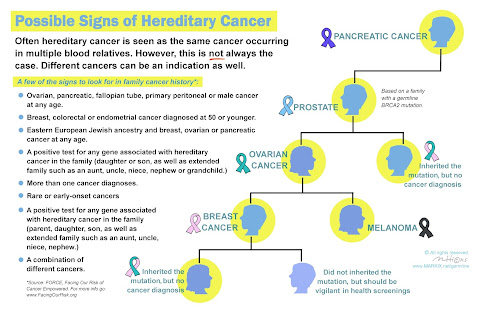
This is the last of the infographics I created about germline mutations. This is the part that is often missed when trying to "connect the dots" in hereditary cancer.
 #germline #GermlineMutation #GeneticTestingSaveLives #GeneticTesting #previvor #HereditaryCancer #GeneticCounseling
#BRCA2 #BRCA1 #CHEK2 #ATM #PALB2 #PTEN #MLH1 #MSH2 #MSH6 #TP53 #LynchSyndrome #1FORCECommunity #FacingOurRisk #HBOC #BeAFORCEofChange

5/25/23

DNA, Mutations, and Genetic Relatives

I created this infographic for My Faulty Gene, a nonprofit organization. My Faulty Gene "provides information and assistance to underserved, uninsured, and underinsured individuals whose family medical history suggests genetic testing might be helpful in identifying an increased risk of disease due to a genetic mutation."

So many people seem to struggle with genetics. They just don't seem to understand that our DNA connects us to so many people -- and diseases. Sometimes I get confused looks when I try to explain about the BRCA2 germline mutation in my late wife's family and how so many in her family are affected by the exact same variant. That's why I created this.


5/3/23

What is a Germline Mutation?

Please Note: There's a new graphic.Download it here


When I talk or write about hereditary cancer as an advocate, I often mention "germline" when referring to mutations that can cause cancer. But I’ve come to realize that many people don’t seem to know what I’m talking about. So I created this graphic about germline mutations and had it reviewed by a certified genetic counselor.


Tragically, it's because of the lack of basic understanding of genetics, even among some health care professionals, that I’m now a widower.

One germline mutation, a broken BRCA2 gene, that I can now recite by heart, has caused several different cancers and numerous cancer deaths in my late wife’s family. The same BRCA2 mutation has been passed down in my wife’s family for at least four generations. And it might have already been passed to the fifth generation.

But now that the specific mutation has been identified, the cycle of cancer can be broken. That’s why genetic knowledge, genetic testing, and the sharing of family health information are so important.

What is in your germline?


4/25/23

Grief Tourist Defined

Grief Tourist Defined Graphic

“Grief tourist” is a term I’ve heard used many times in the cancer and grief communities that I’m now, unfortunately, a part of. And I have witnessed grief tourism personally. Sadly, it’s a far too common occurrence.

I created this a while back but was reluctant to share it because I didn’t want anything to take away from my hereditary cancer advocacy work. But damn, I even see it in my cancer advocacy work, so I decided to create this graphic.

Encountered any grief tourists in one of your difficult journeys in life? Share the graphic.

4/24/23

About BRCA Genes & Mutations

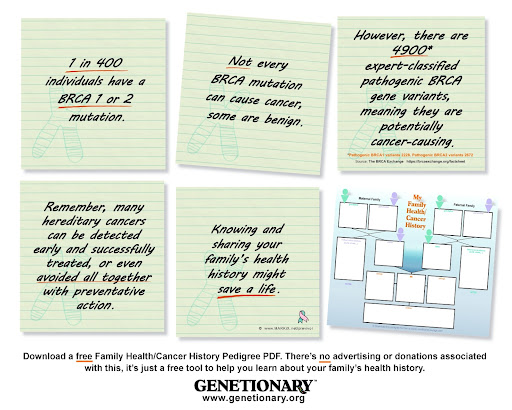
Talking openly about health history with your family is important. Documenting that information, especially if there is a family history of cancer, can be life-saving.  There have been more than 50 hereditary cancer syndromes discovered so far. Many of the cancers associated with these syndromes can be prevented.  Being aware of a family history of cancer can provide important information that you and your physician can use to determine if you’re a candidate for genetic testing, more frequent screenings, and/or other preventive measures.  Download a free Family Health/Cancer History Pedigree PDF. There’s no advertising or donations associated with this, it’s just a simple tool I created to help you learn about your family’s health history.

Talking openly about health history with your family is important. Documenting that information, especially if there is a family history of cancer, can be life-saving.

There have been more than 50 hereditary cancer syndromes discovered so far. Many of the cancers associated with these syndromes can be prevented.

Being aware of a family history of cancer can provide important information that you and your physician can use to determine if you’re a candidate for genetic testing, more frequent screenings, and/or other preventive measures.

Download a free Family Health/Cancer History Pedigree PDF. There’s no advertising or donations associated with this, it’s just a simple tool I created to help you learn about your family’s health history.

4/20/23

Hereditary Cancer Changed Everything

Art from "The Last Hike Before Cancer"Once upon a time I was an introverted whimsical illustrator approaching retirement after a long and rather enjoyable and satisfying career.


I had planned on just fading into the background and enjoying the artist’s life without art directors, editors, agents, and other gatekeepers. Maybe donate a few art supplies where needed and continuing to volunteer for the NPS and maybe paint “happy little trees” somewhere green. But something happened that should have never happened. Hereditary cancer changed everything.

Being a cancer caregiver, solo parent of a previvor, and a hereditary cancer awareness and prevention advocate was something I could have never imagined. It’s the flip side of whimsical. And I really don't want to be there.

Here is a link to an article about how my late wife's nightmare cancer story began and how I became a hereditary cancer prevention advocate. https://www.brcastrong.org/blog/hereditary-cancer-changed-everything

I only share this story in the hopes that the conversation about hereditary cancer will improve among families with a history of cancer and health care professionals that at times seem unaware that there are cancers that can be prevented. Nobody should die of a preventable cancer. Nobody!

Thank you BRCAStrong for asking me to share this story.

Also, see my story at FORCE, Facing Our Risk of Cancer Empowered,  "An Individual Doesn't Get Cancer, a Family Does"

4/7/23

Previvor Defined

Previvor is someone who has not been diagnosed with cancer but is at a higher risk for cancer due to certain inherited genetic mutations in tumor suppressor genes (BRCA1, BRCA2, CHEK2, ATM, PALB2, PTEN, MLH1, MSH2, MSH6, etc.) or family history.  Being a previvor does not mean you will get cancer. But a previvor needs to be proactive and monitored appropriately to reduce the risk. Many hereditary cancers can be detected early and successfully treated, or even avoided all together with preventative action.
---

Because my adult child is a previvor and because my late wife should also be one, I often use the word "previvor" in my articles about hereditary cancer at Cure Today and other places. However, many people have never heard of the word or don’t know the accurate definition. And, not surprisingly, much of the info on the internet just doesn’t correctly explain it. So here’s is my attempt to define it and to shed some light on its origin.

Feel free to share the graphic. 

#hereditarycancer #BRCA2 #BRCA1 #CHEK2 #ATM #PALB2 #PTEN #TP53 #BARD1 #MLH1 #MLH2 #MSH6 #KnowledgeIsPower #previvor #cancerchangedeverything #canceradvocate #cancerprevention #cancercaregiving #genetictesting